Why Visitors Compare Options Before They Commit
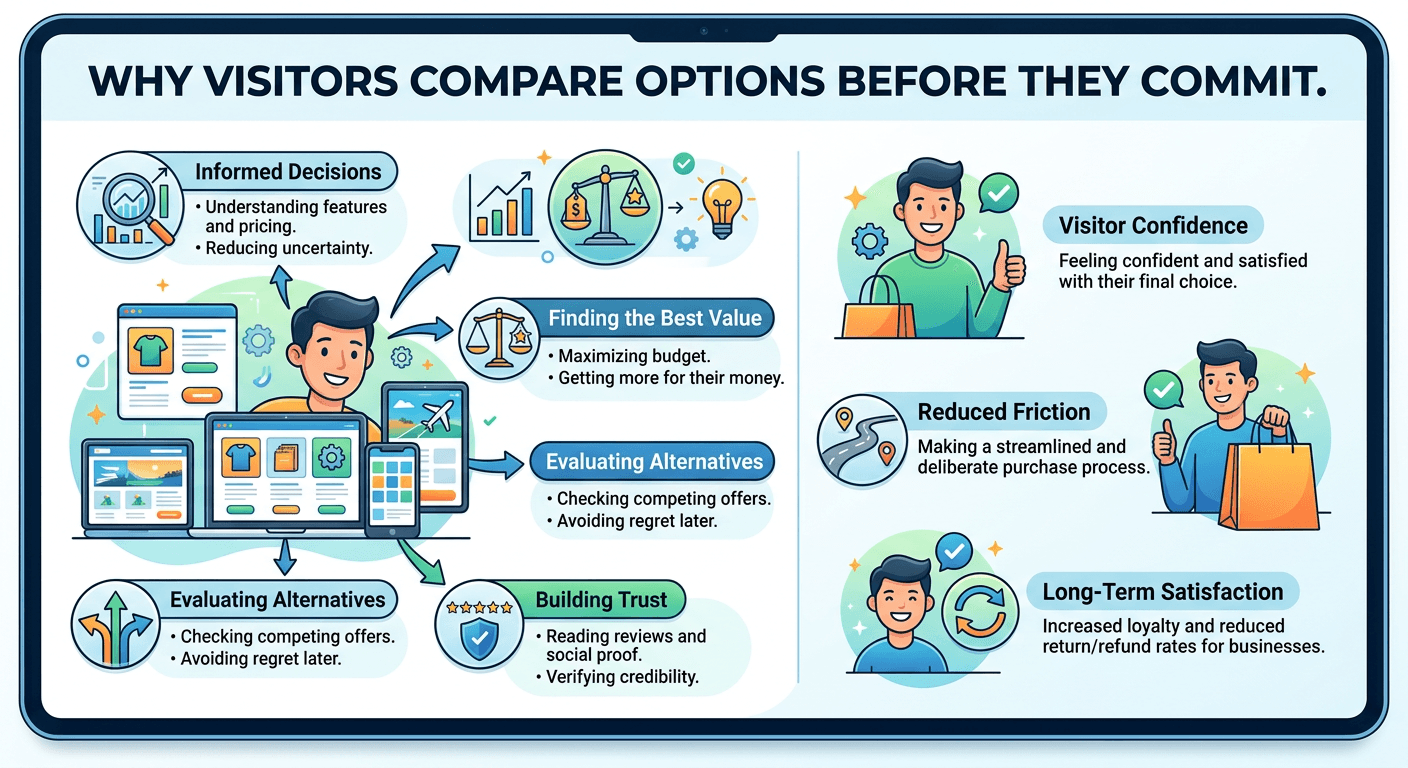
Very few visitors make an immediate decision the moment they land on a website.
Most people compare options first.
They evaluate different products, services, and pricing structures before committing to a choice.
This comparison process plays a major role in conversion behavior.
Comparison Helps Reduce Risk
Buying decisions involve uncertainty.
Visitors want to make sure they’re choosing the best option available.
So they compare.
They compare pricing plans.
They compare features.
They compare different companies.
This process helps them feel more confident about the final decision.
Pricing Tables Encourage Comparison
Pricing pages are designed specifically to support this comparison process.
Visitors can quickly evaluate different plans side by side.
But comparison can also create problems.
When pricing tables contain too much information, visitors struggle to interpret the differences between plans.
This idea connects to The Illusion of Comparison: Why Users Don’t Read Pricing Tables.
Many visitors glance at pricing tables rather than carefully analyzing every feature.
That’s why simplicity and structure are so important.
Anchoring Influences How Options Are Evaluated
Comparison doesn’t happen in isolation.
Visitors interpret options relative to one another.
This is where anchoring plays a powerful role.
The first price someone sees often becomes the reference point for evaluating other options.
This psychological effect is explored further in The Anchoring Effect.
Anchoring helps shape how visitors interpret value across pricing tiers.
Making Comparisons Easier Improves Conversions
High-performing pricing pages simplify comparisons.
Clear feature differences.
Logical tier progression.
Visual emphasis on recommended plans.
These elements help visitors evaluate options quickly.
When comparisons feel easy, decisions feel easier too.