Why Users Don’t Trust Generic Messaging
Generic messaging doesn’t just get ignored.
It actively reduces trust.
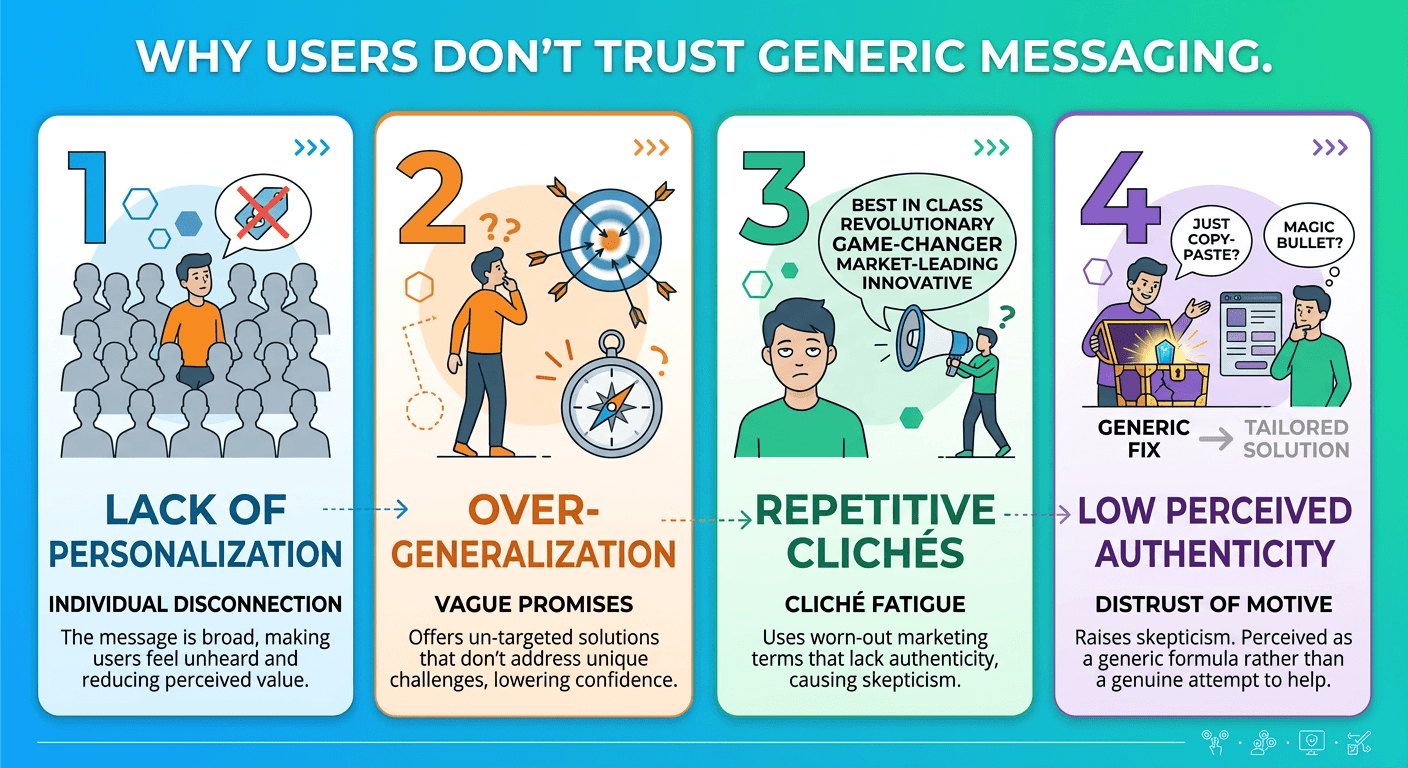
People Have Seen It All Before
“We help businesses grow.” “We deliver results.” “We drive success.”
Most users have seen versions of these lines dozens of times.
So when they read it again, they don’t process it.
They filter it out.
Because it doesn’t feel real.
Generic Messaging Feels Like Marketing
The moment something sounds familiar and vague, users label it:
“This is just marketing.”
And once that label is applied, trust drops immediately.
Not because what you’re saying is wrong.
Because it doesn’t feel specific enough to believe.
Specificity Is What Makes Things Credible
The difference between trust and skepticism is usually detail.
“Helped a SaaS company increase demo conversions by 42% in 60 days”
vs
“We improve conversions”
One creates belief.
The other creates doubt.
This Is Where Small Words Matter
Even subtle changes in phrasing can shift perception.
Clearer language. More direct statements. Less filler.
This connects directly to Microscopy: The Small Words That Increase Conversions.
Generic Messaging Increases Cognitive Load
When something is vague, users have to interpret it.
“What does that actually mean?” “How does that apply to me?”
That extra effort slows understanding.
(Connected to: Cognitive Load: The Hidden Conversion Killer on Most Websites)
Specific Messaging Reduces Effort
When something is clear and concrete, users don’t have to think.
They get it instantly.
And instant understanding builds confidence.
Clear > Clever > Generic
Clever messaging might get attention.
But clear messaging builds trust.
And generic messaging does neither.
If It Doesn’t Feel Real, It Doesn’t Convert
Users don’t need perfect wording.
They need believable wording.
And that comes from specificity.