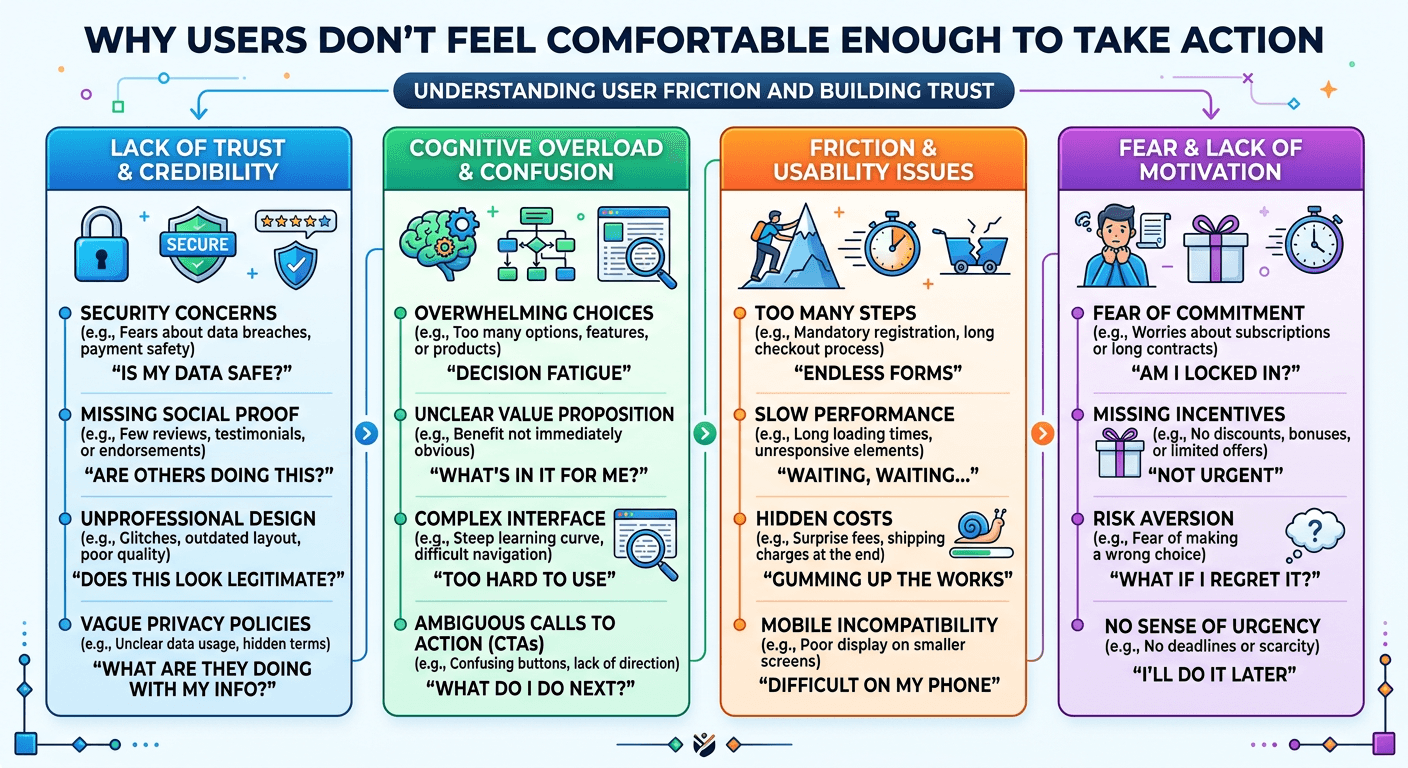
Why Users Don’t Feel Comfortable Enough to Take Action
Conversion doesn’t happen when someone is interested.
It happens when they feel comfortable enough to move forward.
And those are not the same thing.
Interest Gets Attention — Comfort Drives Action
A user can be interested and still not convert.
They can like what they see. They can understand the offer. They can even scroll through the entire page.
And still hesitate at the end.
Because something doesn’t feel fully comfortable yet.
Comfort Is a Psychological State
It’s not about design alone.
It’s about how the entire experience feels.
Does this make sense? Does this feel safe? Do I trust this enough to act?
If the answer to any of those is uncertain, people pause.
Discomfort Comes From Subtle Signals
It’s rarely one big issue.
It’s small things:
Unclear messaging
Missing proof
Inconsistent tone
Weak structure
Each one adds a little friction.
And those small signals combine into a feeling:
“I’m not fully sure about this.”
This Is Where Trust Stacking Becomes Critical
(Connected to: Trust Stacking: The Hidden Multiplier Behind Conversions)
Comfort doesn’t come from one element.
It builds through layers:
A clear headline
A recognizable logo
A testimonial
A simple explanation
Each one reinforces the next.
Users Need to Feel Safe Before They Act
Not pressured.
Not rushed.
Safe.
Because action always involves some level of risk.
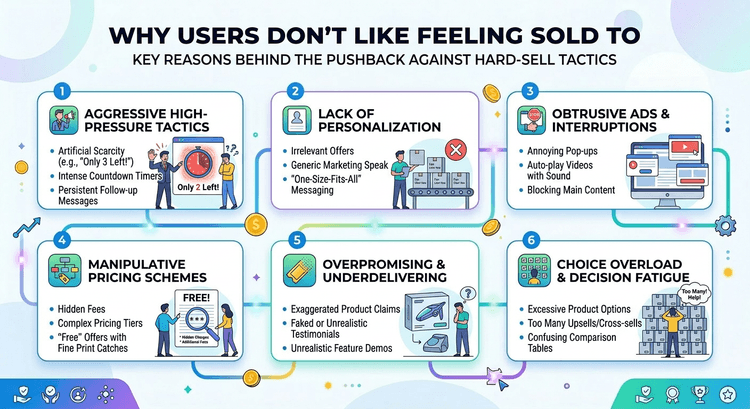
This Is Why Aggressive Pages Often Underperform
They try to push action before comfort is built.
And users resist that.
Not consciously.
Instinctively.
Comfort Reduces the Need to Overthink
When something feels right, users don’t second-guess as much.
They don’t look for alternatives.
They don’t delay.
They move.
Comfortable Users Convert Faster
Because the decision doesn’t feel heavy.
It feels natural.
Build Comfort First — Action Follows
That’s the real sequence.
Not attention → action.
But attention → comfort → action.