Why Most Pages Try to Do Too Much
One of the most common issues across websites:
Pages trying to accomplish everything at once.
Too Many Goals Creates Noise
A single page tries to:
Explain the product
Sell the product
Build trust
Handle objections
Educate the user
All at the same time.
It feels comprehensive.
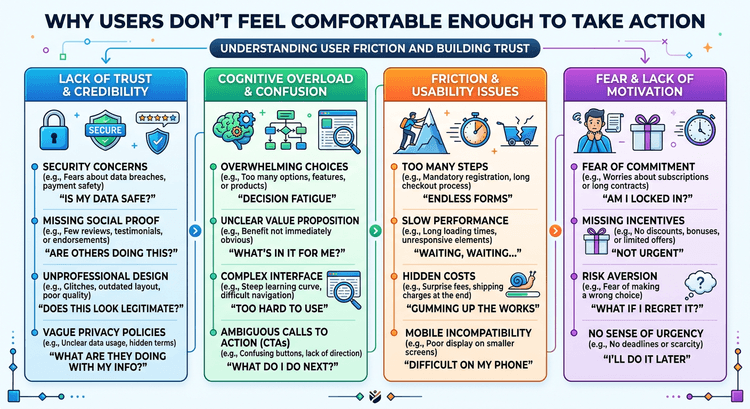
But to the user, it feels overwhelming.
More Content Doesn’t Mean More Clarity
Adding more sections doesn’t make a page stronger.
It usually makes it harder to understand.
Because now the visitor has to figure out:
What matters most
What they should focus on
What they should do next
And that mental effort slows everything down.
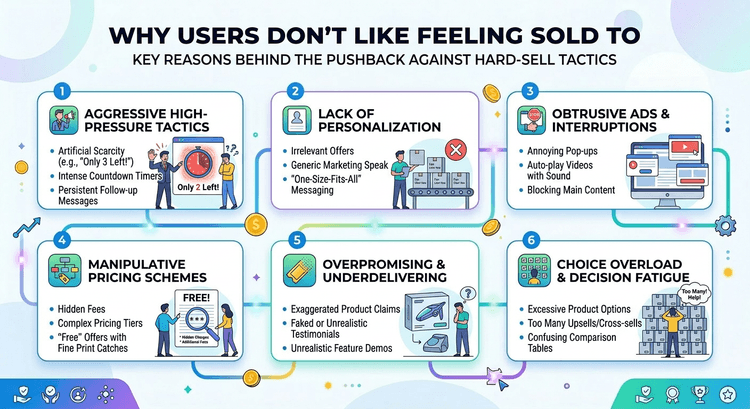
This Is Where Choice Overload Shows Up
Even if you’re not presenting “options,” you’re still creating decisions.
Read this or skip it
Click here or scroll
Focus on this or that
Too many of those decisions = hesitation.
(Connected to: Why Too Many Choices Kill Conversion)
High-Converting Pages Are Focused
The best pages feel simple.
Not empty.
Not minimal for design reasons.
Focused.
They do one thing well.
And everything on the page supports that one goal.
One Page, One Job
If a page doesn’t have a clear purpose, the user feels it.
Even if they can’t explain it.
And when something feels unclear, they disengage.
Clarity Creates Momentum
When a page is focused, the experience feels easier.
And when the experience feels easier, people keep moving.
That’s how you maintain Conversion Momentum