Why Users Default to “Doing Nothing”
A lot of people don’t say no.
They just don’t do anything.
And that’s a much bigger problem.
Inaction Is the Default Decision
When someone lands on your website, they’re not automatically trying to convert.
They’re evaluating.
Quietly.
And if anything feels even slightly off — unclear, complicated, uncertain — they default to the easiest option:
Doing nothing.
No click. No form. No next step.
Just exit.
You’re Not Fighting Competitors — You’re Fighting Inertia
Most businesses think they’re competing against other companies.
But most of the time, you’re competing against:
Indecision
Distraction
Low urgency
People don’t need a better option to leave.
They just need a reason not to act right now.
And “I’ll do this later” almost always turns into never.
Effort Is What Pushes People Away
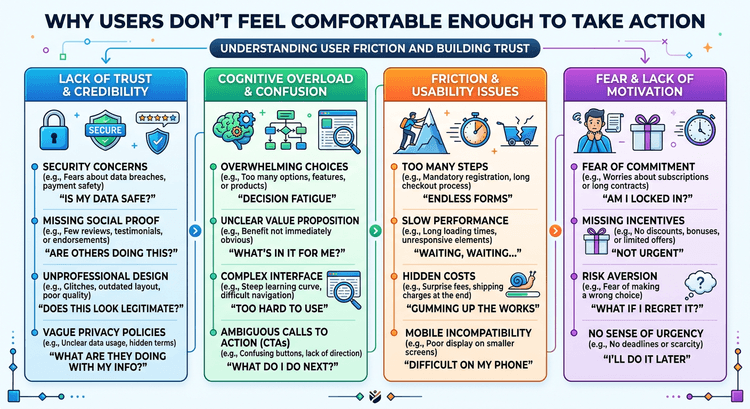
The moment something feels like work, people disengage.
That effort can come from:
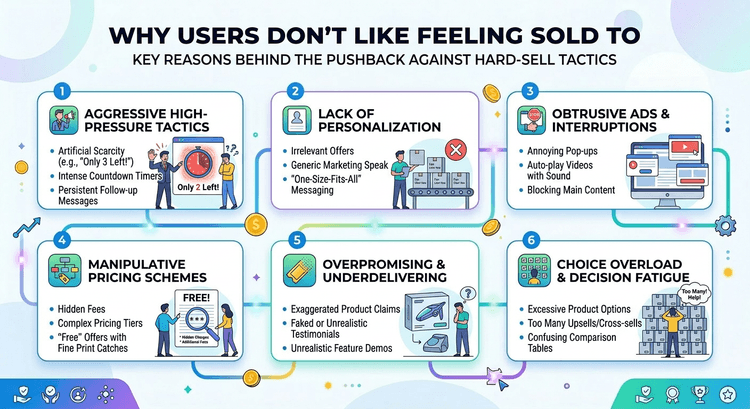
Too many options
Too much text
Unclear next steps
Forms that feel long or invasive
None of these are dealbreakers on their own.
But together, they create friction.
And friction leads to hesitation.
This connects directly to:
Micro-Friction
How Decision Friction Breaks Sales Funnels
The Easier the Path, The More Likely the Action
High-converting websites don’t try to push people.
They remove resistance.
Clear next step
Minimal choices
Simple structure
The experience feels easy.
And when something feels easy, people are far more likely to follow through.
You Don’t Need More Persuasion — You Need Less Friction
Most websites try to fix this problem with more:
More copy
More selling
More explanation
But the real solution is usually the opposite.
Remove what’s getting in the way.
Because once the path is clear, people don’t need to be convinced.
They just need to not be slowed down.