Above-the-Fold UX: What Users Actually Notice First
The moment a page loads, visitors don’t read every word.
They scan.
Their eyes move quickly across the top portion of the page, searching for signals that help them understand what they’re looking at.
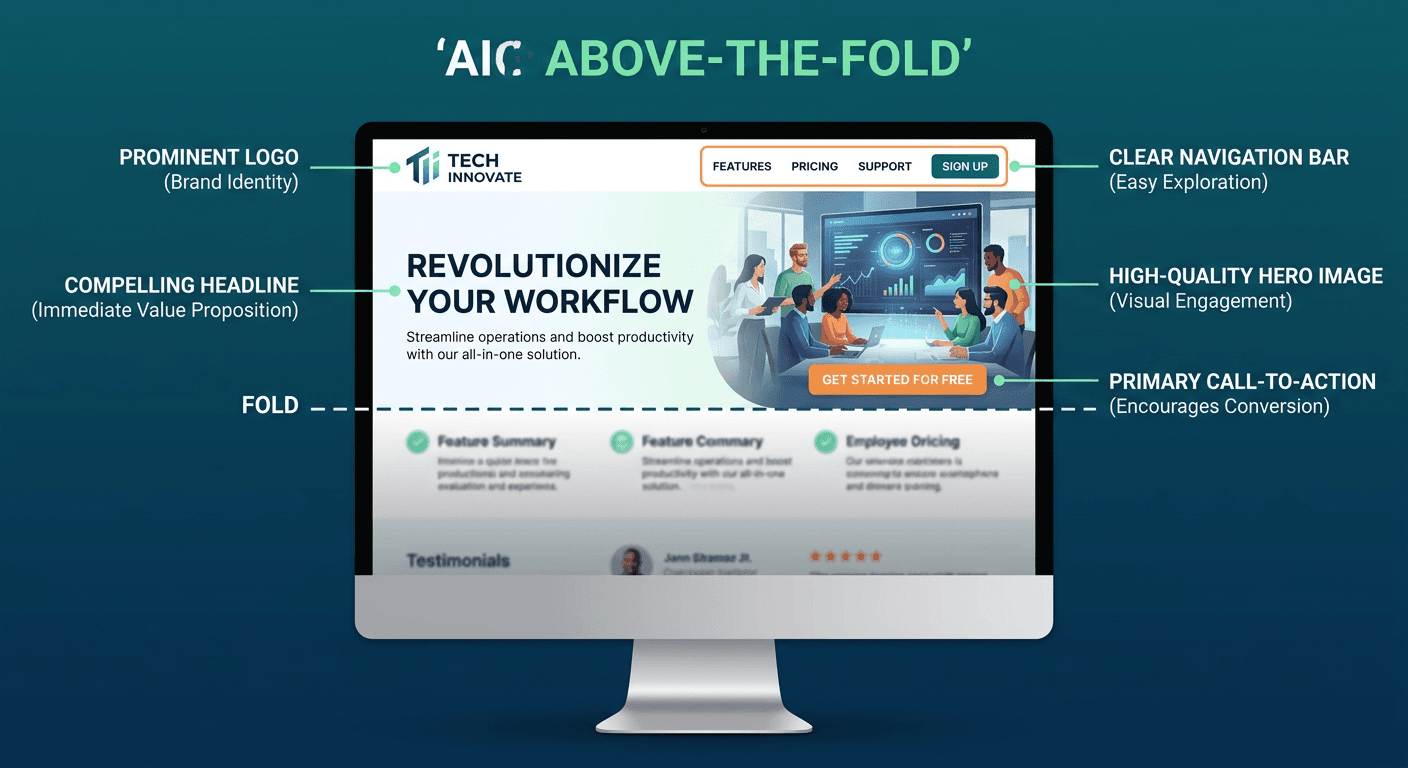
This area is known as above the fold, and it plays a huge role in whether visitors continue exploring your website.
The First Impression Happens Here
Within seconds, visitors evaluate:
The headline The visual design The credibility signals The call to action
These elements determine whether the visitor keeps scrolling or leaves.
Even small issues can interrupt that early impression.
Slow loading pages, for example, often break this moment before the visitor even reads the content. This is why page speed plays such a major role in early engagement.
For more on that, see The Role of Page Speed in Conversion Psychology.
Headlines Carry Most of the Weight
The headline is usually the first piece of information visitors process.
If the headline feels vague or confusing, the visitor has to work harder to understand the page.
That friction often leads to abandonment.
Clear messaging removes that friction and immediately communicates value.
Trust Signals Matter Early
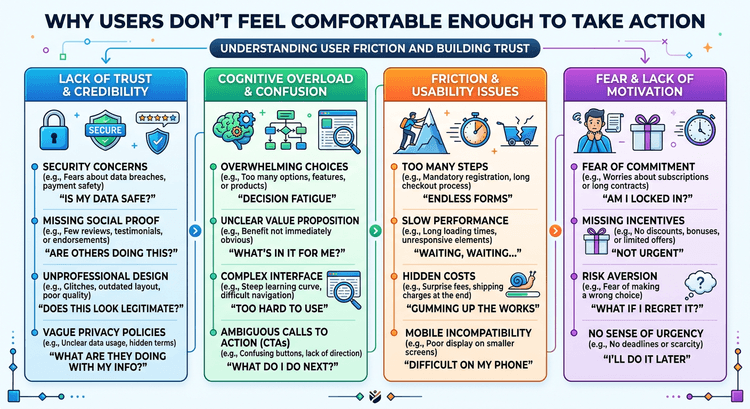
Many visitors won’t scroll very far before forming an opinion about your business.
That’s why credibility signals near the top of the page can make a significant difference.
Testimonials, recognizable clients, and proof points help visitors feel confident continuing the experience.
This layered approach to credibility is often referred to as trust stacking, which we explore in Trust Stacking: The Hidden Multiplier Behind Conversions.