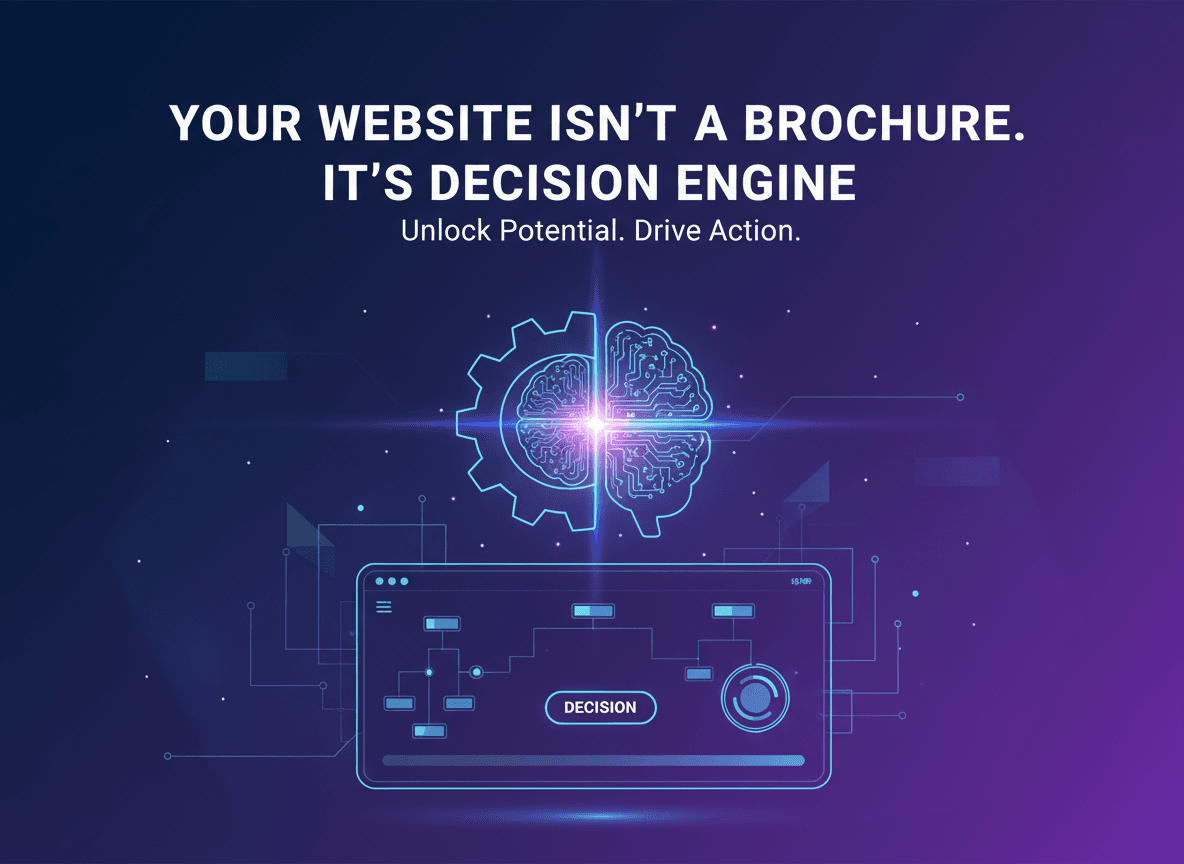
Your Website Isn’t a Brochure. It’s a Decision Engine.
Brochure thinking is outdated.
Websites don’t exist to inform.
They exist to guide decisions.
That shift is structural.
Informational sites educate.
Conversion-focused sites direct.
There’s a difference.
A Decision Engine Does Five Things
Clarifies who it’s for
Defines the problem
Shows the outcome
Reduces risk
Guides one primary action
Anything outside that framework is secondary.
If you’re investing in Local SEO or paid acquisition, your website cannot be passive.
It must convert intent into action.
Direction Beats Decoration
Design trends change.
Psychology doesn’t.
Users want:
Clarity
Speed
Confidence
Simplicity
When those are structured intentionally, conversion rises.
When they aren’t, traffic leaks.
A brochure says: “Here’s who we are.”
A decision engine says: “Here’s what you should do next.”
That difference affects revenue.
Why Structure Wins in Competitive Markets
In competitive local markets, everyone has:
A website
Reviews
Ads
SEO
What separates winners isn’t visibility alone.
It’s conversion efficiency.
If two companies receive equal traffic, the one with better structure scales faster.
Because margin compounds.
In UX Best Practices for Higher Conversions (2026), UX is defined as revenue architecture.
That’s what this means.
Not prettier layouts.
Smarter pathways.
If marketing brings attention, your website must convert attention into action.
Otherwise, you’re paying for awareness instead of growth.
Traffic is rented.
Conversion is owned.
And owned assets scale.