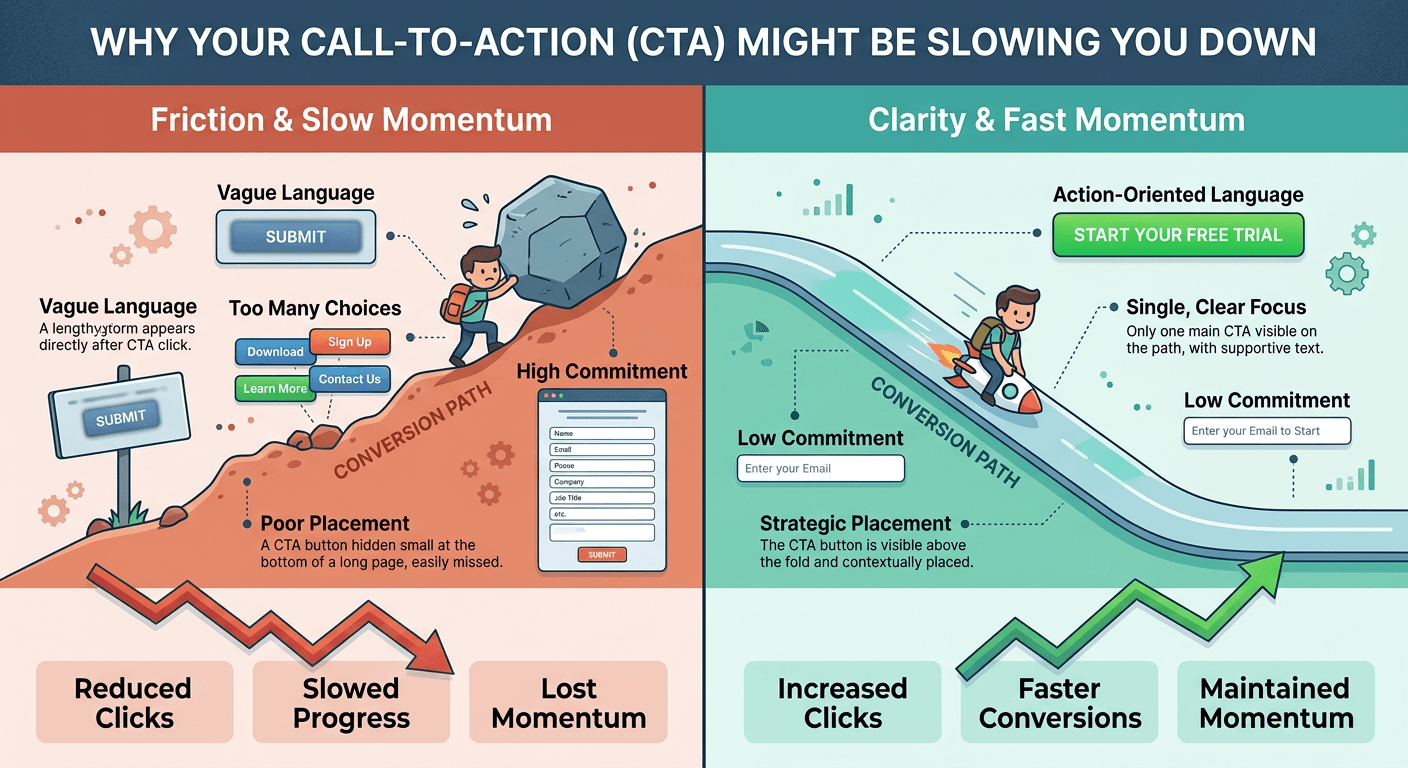
Why Your Call-To-Action Might Be Slowing You Down
Most people think CTAs are simple.
Just add a button.
“Get Started”
“Book Now"
“Sign Up”
Done.
But CTAs are where decisions actually happen.
And small mistakes here can kill conversions.
The CTA Isn’t Just a Button
It’s a moment.
The moment someone decides:
“I’m doing this.”
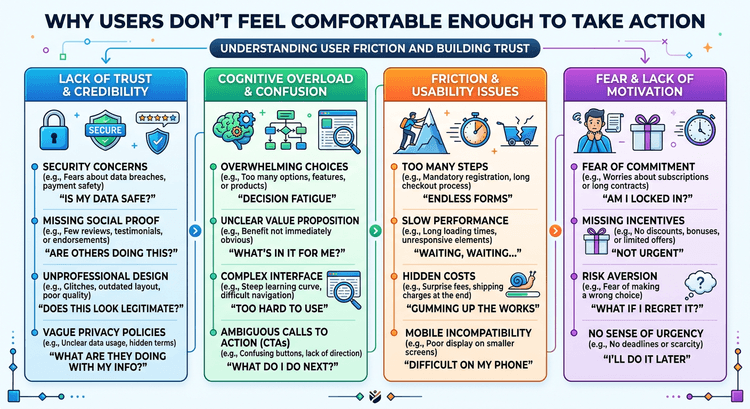
If that moment feels unclear or uncomfortable, they pause.
And that pause is where you lose them.
Misaligned CTAs Create Friction
A common problem:
The CTA doesn’t match where the user is mentally.
Someone is still learning → you push “Buy Now” Someone is ready → you give a weak “Learn More”
That mismatch creates hesitation.
This is why CTAs need to align with intent.
(Connected to: The Psychology of High-Converting Call-to-Action Buttons)
Context Matters More Than Copy
People obsess over button wording.
But placement matters more.
What comes before the CTA?
Did you:
Explain the value?
Build trust?
Reduce risk?
If not, the CTA feels premature.
And people don’t click.
CTAs Work When the Decision Is Already Made
The best CTAs don’t force decisions.
They capture them.
By the time someone clicks, they should already feel confident.
That’s why CTAs work best after:
Proof
Clarity
Structure
Not before.