Why Trust Signals Matter More Than Perfect Design
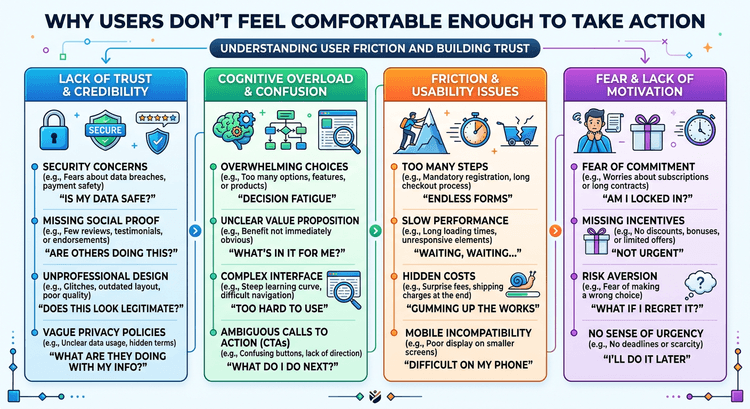
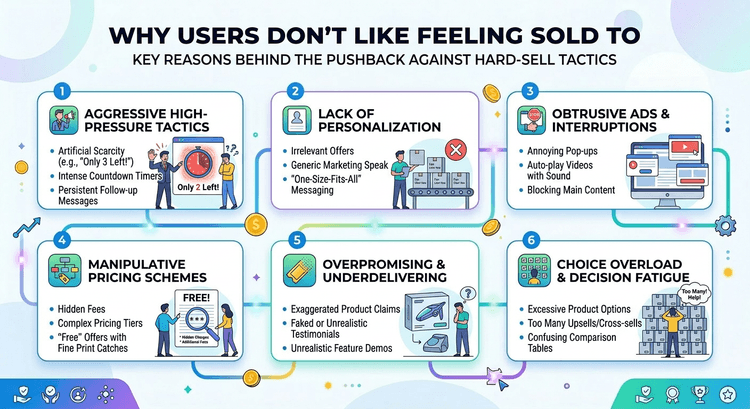
A website can look beautiful and still fail to convert.
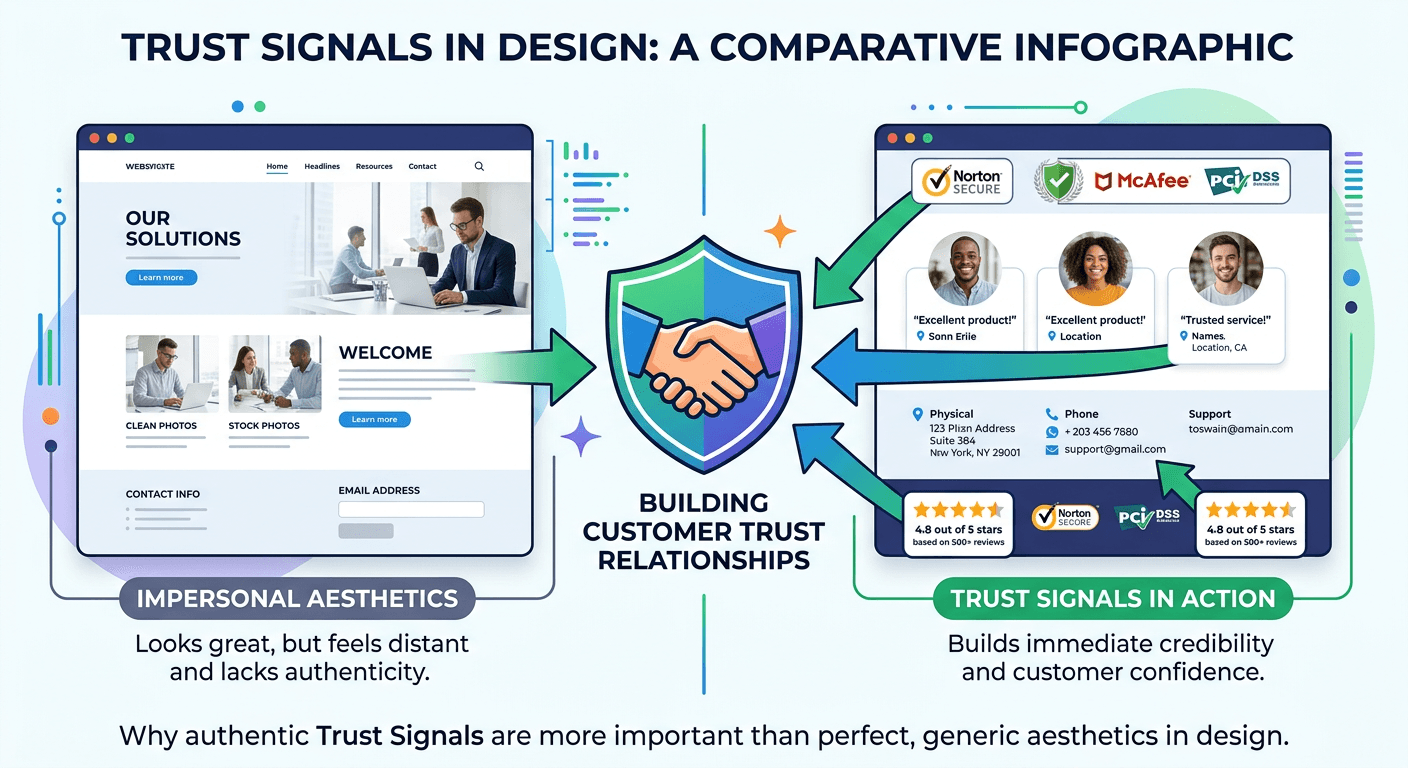
Design alone doesn’t create trust.
Visitors need evidence that the business behind the website is credible.
That evidence comes from trust signals.
Testimonials.
Client logos.
Case studies.
Results and performance metrics.
Each signal reassures visitors that they’re making a safe decision.
Trust Develops in Layers
Trust rarely comes from a single element.
Instead, it builds gradually.
A visitor might first notice a testimonial.
Later they see recognizable brands.
Then they read a case study describing real results.
Each signal strengthens confidence.
This layered approach to credibility is discussed in Trust Stacking: The Hidden Multiplier Behind Conversions.
When multiple trust signals appear across the website, visitors feel more comfortable moving forward.
Proof Reduces Uncertainty
Most buying decisions involve uncertainty.
Will this product work?
Is this company reliable?
Will I regret this purchase?
Trust signals answer these questions indirectly.
They show that other customers have already had positive experiences.
That reassurance reduces perceived risk.
Trust Signals Work Best Near Decision Points
Trust signals become especially important near moments of action.
Near pricing tables.
Near signup forms.
Near calls to action.
These are the moments when visitors are deciding whether to move forward.
When proof appears exactly where doubt might arise, hesitation decreases.
And when hesitation decreases, conversions increase