Why Most Websites Feel Slower Than They Actually Are
A website doesn’t have to be slow to feel slow.
That’s the part most people miss.
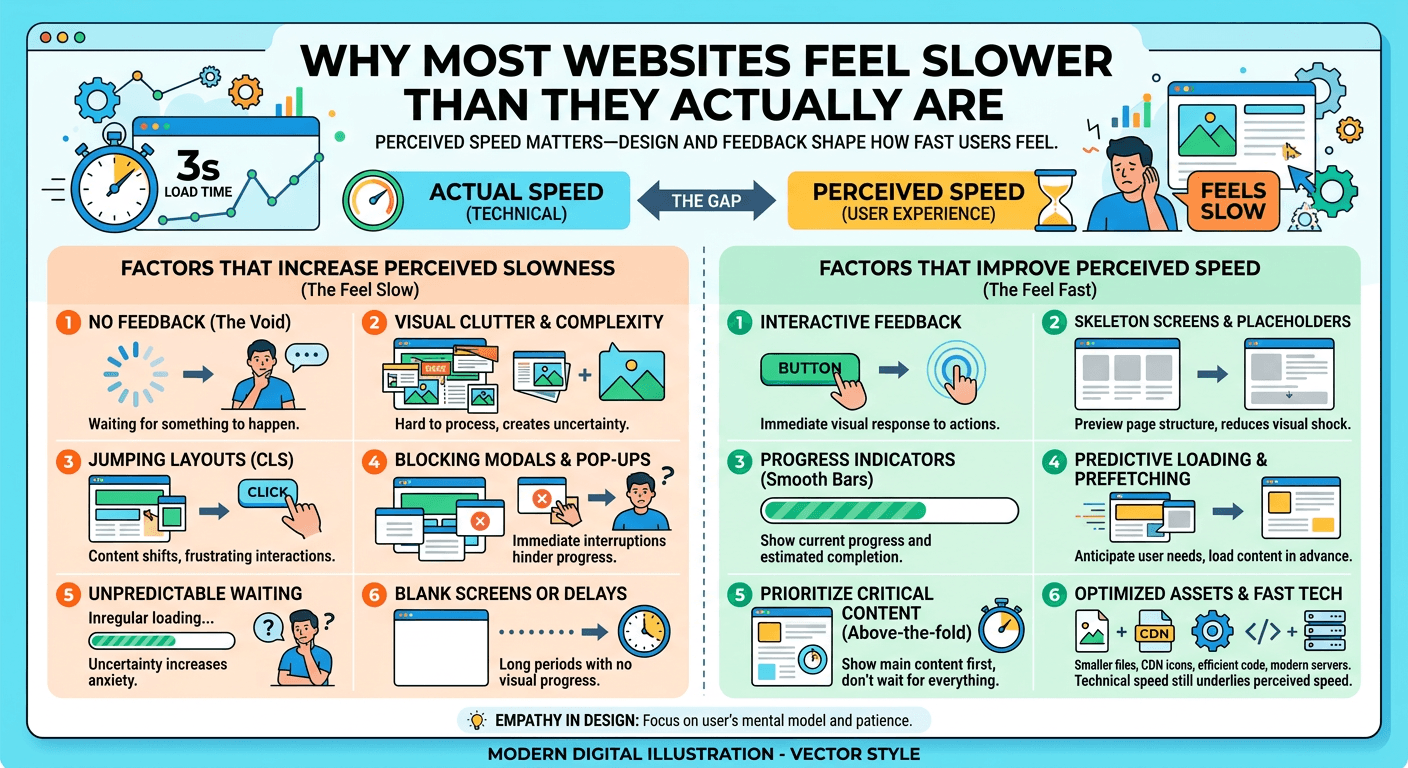
Perception Matters More Than Speed
You can have a technically “fast” site that still feels laggy.
Why?
Because of how it loads.
Blank screens.
Delayed content.
Layout shifting.
Even small things like that make users feel like something’s wrong.
And once that feeling kicks in, trust drops.
This ties directly into The Role of Page Speed in Conversion Psychology.
Waiting Creates Doubt
People don’t just get impatient.
They start questioning things.
“Did this load right?”
“Is this site broken?”
“Is this worth it?”
That doubt shows up before they even read anything.
And once doubt shows up, conversion gets harder.
Speed Is Part of the Experience
It’s not just performance.
It’s perception.
The faster something feels, the smoother the experience.
And smoother experiences convert better.