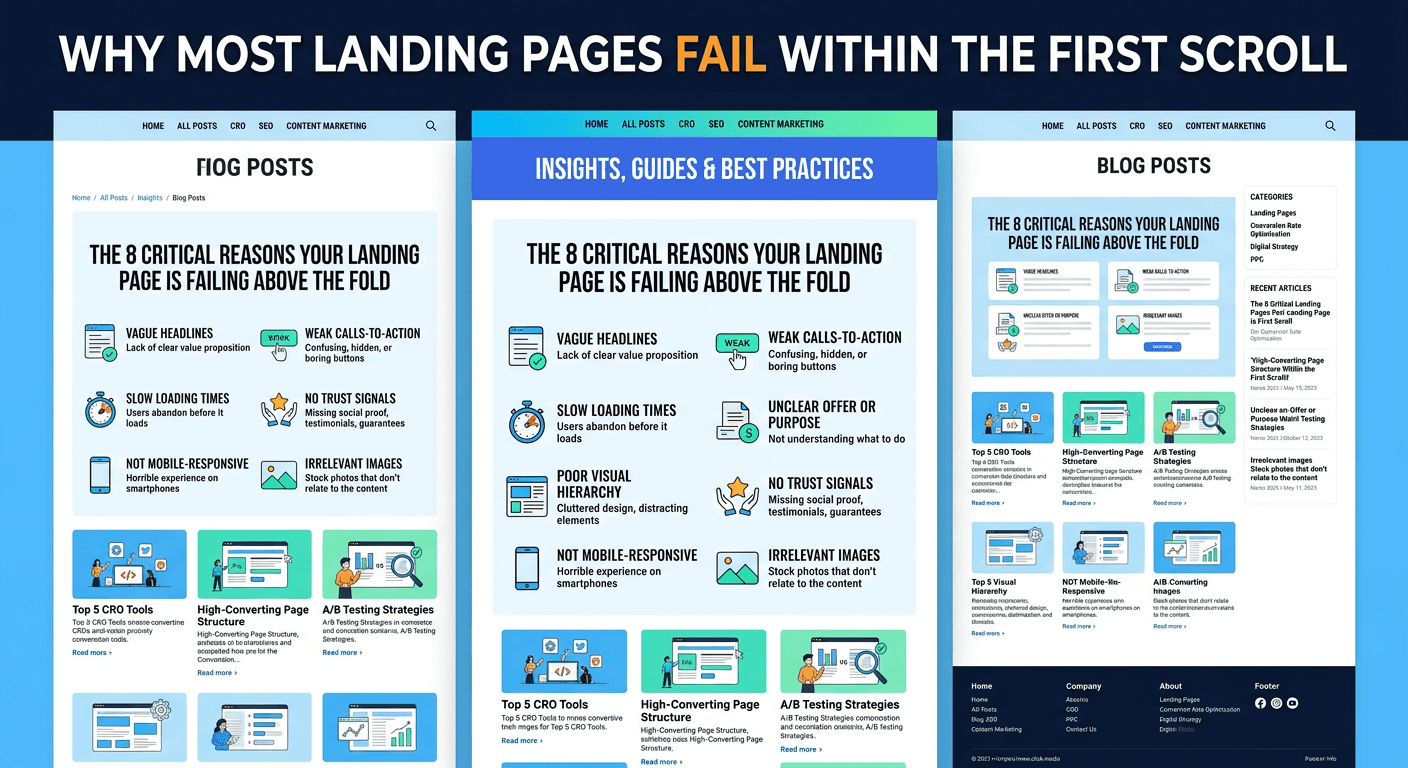
Why Most Landing Pages Fail Within the First Scroll
Many businesses assume their landing pages fail because of weak offers or pricing.
But in reality, most landing pages fail much earlier.
They fail within the first scroll.
Visitors arrive with curiosity, but that curiosity can disappear quickly if the page doesn’t provide clarity or confidence.
Visitors Scan Before They Read
When someone lands on a page, they’re not carefully reading every line.
They’re scanning for answers.
What is this? Is it relevant to me? Can I trust it?
If those answers aren’t obvious, visitors move on.
Early Friction Breaks Momentum
Conversion relies heavily on momentum.
Once a visitor begins exploring your page, you want that momentum to continue.
But friction interrupts that process.
Slow page speed, confusing messaging, or too many options can all stop visitors before they reach the core offer.
This dynamic is explored further in Conversion Momentum: Why Most Funnels Leak Before Pricing.
Structure Matters
Landing pages should guide visitors step by step:
Problem Solution Proof Offer
When that structure is clear, visitors naturally continue scrolling.
When it isn’t, the page feels disorganized and confusing.
And confusion is one of the biggest enemies of conversion.