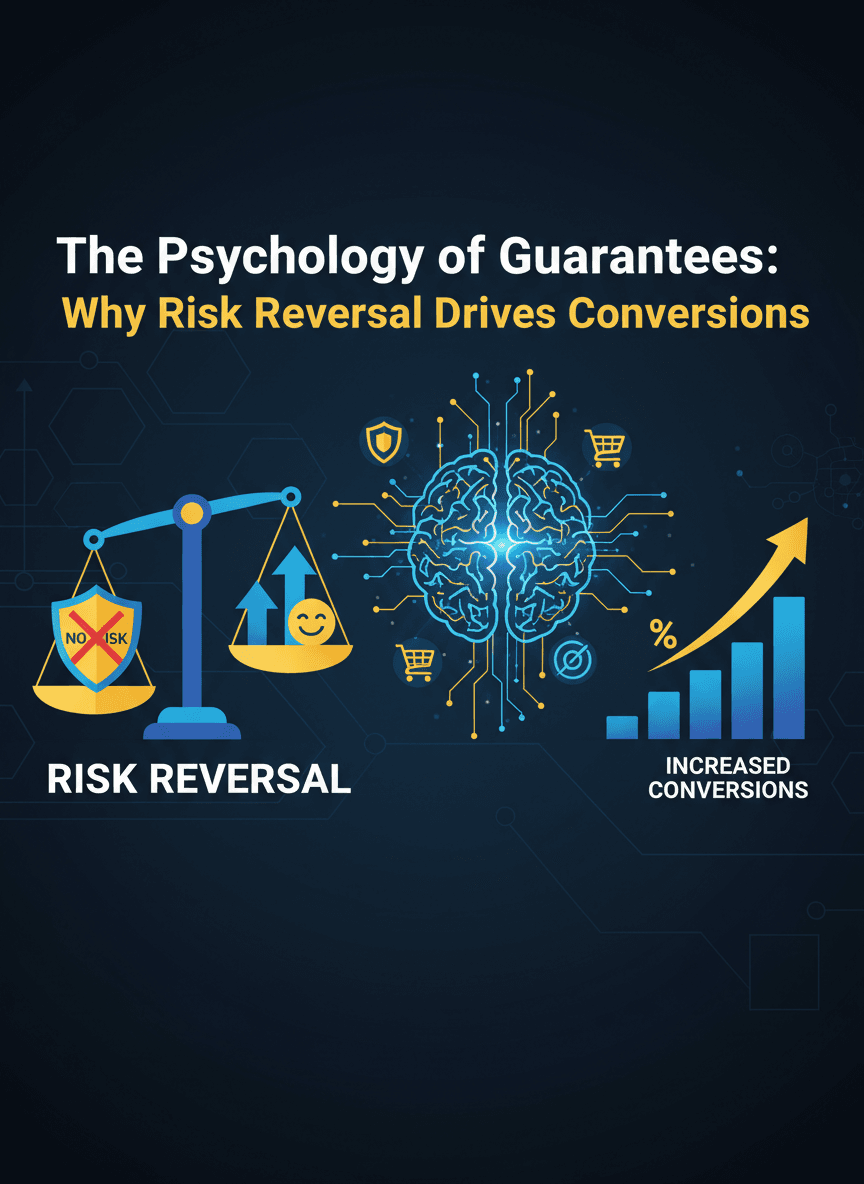
The Psychology of Guarantees: Why Risk Reversal Drives Conversions
Guarantees don’t reduce refunds.
They increase conversions.
Most businesses misunderstand their purpose.
A guarantee is not a defensive tool.
It’s a confidence signal.
If you’ve read Decision Friction: The Silent Revenue Killer you already know hesitation happens in micro-moments. Guarantees directly target those moments.
But only if they’re structured correctly.
Why Guarantees Work (When They Work)
Every buying decision is a risk calculation.
Not financial risk.
Psychological risk.
What if this doesn’t work?
What if I waste time?
What if I look stupid for choosing this?
A strong guarantee reduces perceived downside.
And when downside shrinks, action increases.
This is why risk reversal is one of the core structural elements covered in Pricing Page Psychology: Where Conversions Are Won or Lost.
Weak Guarantees vs Strong Guarantees
Not all guarantees build trust.
Some create skepticism.
Weak Guarantees:
Buried in fine print
Complicated claim processes
Vague language (“Satisfaction guaranteed”)
These increase doubt.
Strong Guarantees:
Clear and specific
Easy to understand
Visibly placed near pricing or CTAs
Framed around outcomes
A strong guarantee says:
“We’re confident. You’re safe.”
That shifts the emotional state of the buyer.
Where Guarantees Should Be Placed
Placement is strategic.
High-performing pages position guarantees:
Directly under pricing tiers
Near primary CTAs
Inside checkout micro-copy
In FAQs addressing hesitation
Guarantees reduce friction at pressure points.
And friction is what slows revenue.
The Strategic Shift
Most companies try to improve conversion by lowering price.
Smart companies reduce risk.
Those are not the same move.
If pricing feels expensive, revisit:
Price Sensitivity Is a Trust Problem
Because price resistance is often uncertainty in disguise.
Guarantees aren’t just policy.
They’re persuasion.