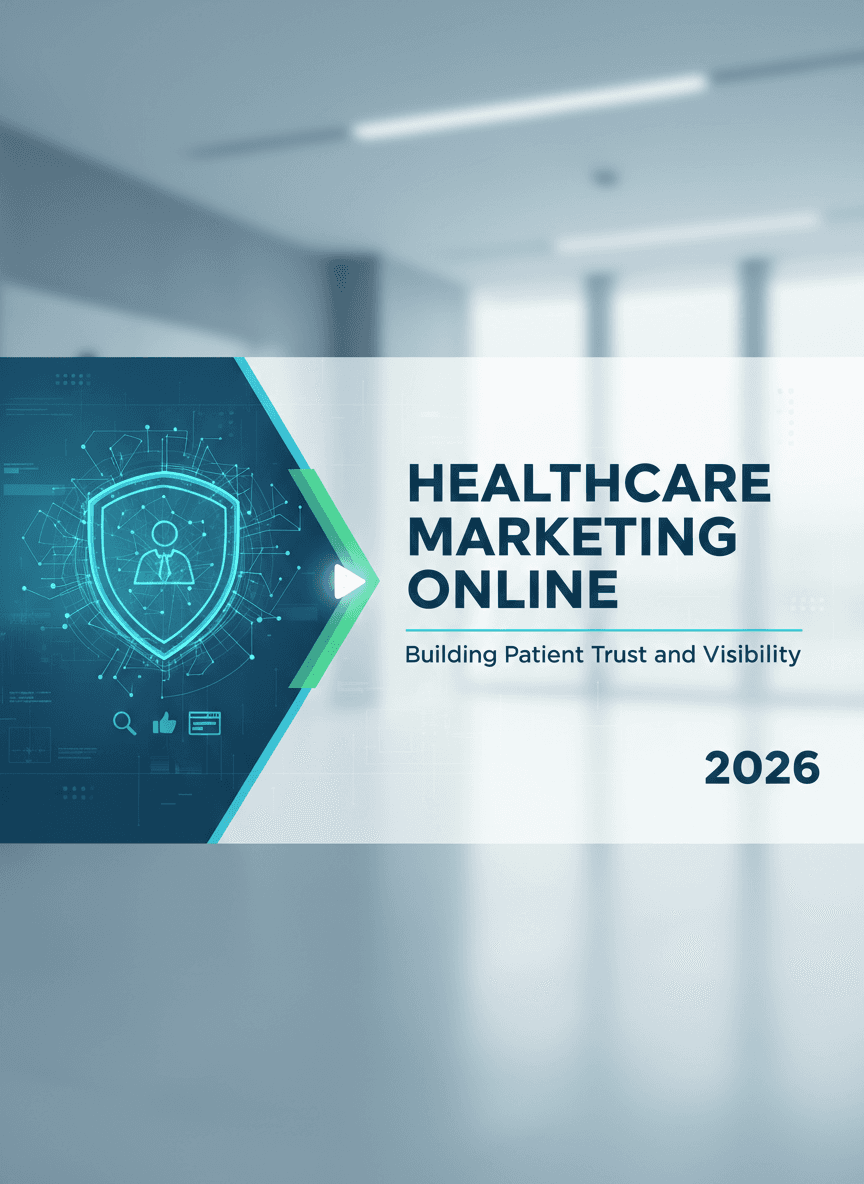
Healthcare Marketing Online: Building Patient Trust and Visibility (2026)
Healthcare marketing isn’t like other industries.
You’re not selling convenience. You’re not selling upgrades. You’re not selling impulse decisions.
You’re earning trust at moments of uncertainty.
Patients are anxious.
They’re cautious.
They’re researching carefully.
In 2026, visibility gets you considered.
Trust gets you chosen.
Here’s what’s actually working.
1. Local Search Is the Front Door
Most patient journeys start with intent-based search:
“Primary care doctor near me”
“Dermatologist accepting new patients”
“Urgent care open now”
“Best orthopedic surgeon in [city]”
If you’re not visible in local results, you’re not in the conversation.
Winning healthcare practices focus on:
Fully optimized Google Business Profiles
Consistent name, address, phone data
Location-specific service pages
Ongoing review generation
Accurate service categorization
But ranking is just entry.
If someone clicks and your site feels unclear or generic, they leave.
Visibility attracts.
Clarity converts.
2. Authority Content Reduces Anxiety
Healthcare decisions are emotional.
Patients search for:
Symptoms
Treatment options
Recovery timelines
Risks
Insurance coverage
What to expect
Surface-level content doesn’t build trust anymore.
High-performing healthcare brands publish:
Detailed treatment explanations
Step-by-step procedure breakdowns
Real physician video content
Transparent timelines
Clear insurance information
Direct answers to common fears
AI-generated medical summaries are everywhere now.
Authority comes from experience.
Patients want to feel like a real professional is guiding them.
Reduce uncertainty. Trust increases.
3. Reviews Are Trust Infrastructure
In healthcare, reviews aren’t optional.
They influence:
Click-through rate
Booking decisions
Perceived credibility
Local search visibility
Patients evaluate more than outcomes.
They evaluate:
Communication
Bedside manner
Staff professionalism
Wait times
Office environment
Winning practices:
Consistently request reviews
Respond professionally to every review
Highlight specific patient experiences
Showcase testimonials near booking buttons
Trust must be visible before the appointment.
4. Your Website Must Remove Friction
Healthcare websites often look professional.
That’s not enough.
High-converting healthcare UX includes:
Clear “Book Appointment” buttons
Online scheduling integration
Click-to-call functionality
Short intake forms
Insurance information upfront
Office hours and locations clearly displayed
Physician credentials easy to find
Patients shouldn’t search for next steps.
If booking feels complicated, they choose another provider.
Friction delays action.
Clarity accelerates it.
5. Compliance Builds Confidence
In healthcare, privacy matters.
Patients are aware of data security risks.
Marketing systems must include:
Secure forms
HIPAA-compliant communication tools
Clear privacy policies
Transparent data usage explanations
Operational integrity reinforces brand trust.
If patients question security, they won’t convert.
6. Paid Search for High-Intent Services
Certain services require immediate action:
Urgent care
Emergency dental
Same-day consultations
Specialized procedures
Paid search works when it’s structured properly:
High-intent keyword targeting
Geographic precision
Clear service-specific ads
Call tracking
Appointment attribution
Optimizing for appointment quality — not just volume — protects ROI.
In healthcare, patient lifetime value compounds.
Retention and referrals matter.
7. Paid Social for Familiarity and Education
Healthcare decisions rarely happen after one touch point.
Paid social helps:
Build physician familiarity
Promote educational content
Reinforce expertise
Increase brand recognition
Support re-targeting campaigns
Patients are more comfortable booking with providers they recognize.
Recognition lowers perceived risk.
Lower risk increases bookings.
8. Measure What Actually Matters
Serious healthcare marketers track:
Cost per appointment
Appointment-to-patient conversion rate
Revenue per patient
Lifetime value
Referral rate
Service-line profitability
Not impressions. Not engagement.
If certain specialties produce higher-margin services, marketing should reflect that.
Data prevents emotional budget decisions.
Data protects profitability.
9. AI as Operational Support
AI in healthcare marketing works best behind the scenes:
Scheduling automation
Chat triage systems
Ad optimization
Content structuring
Patient follow-up workflows
It should never replace human authority.
Healthcare is built on expertise and empathy.
AI should support efficiency.
Trust must remain human.
The Real Shift
Healthcare marketing in 2026 isn’t about being loud.
It’s about being reassuring.
Patients don’t want hype.
They want:
Clear information. Visible credentials. Simple booking. Professional communication. Consistent follow-up.
Visibility opens the conversation.
Trust earns the appointment.
Final Thought
Healthcare marketing online isn’t complicated.
It’s disciplined.
Reduce anxiety. Increase clarity. Show authority. Remove friction. Measure revenue.
Patients choose providers they trust.
Trust is built through structure.
And structured systems scale predictably.